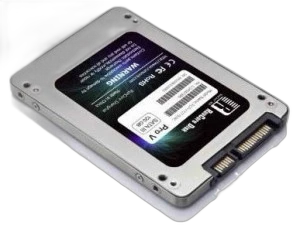
Pro V Max
SATA 2.5" · SATA 3 6GBps · SandForce 2281
Specifications
| Interface | SATA 3 6GBps |
|---|---|
| Controller | SandForce 2281 |
| NAND Type | MLC |
| DRAM Cache | N/A |
| Warranty | 5 years |
| Active Power | 1 W |
| Idle Power | 0.65 W |
| Seq Read | 560 MB/s |
| Seq Write | 525 MB/s |
Overview
The Pro V Max is an improvement over RunCore's previous SSD, the Pro V. The improvements are clearly seen on the sequential read and write speeds as the Pro V Max now boasts numbers 560 MB/s and 525 MB/s respectively. The IOPS is also improved as it now stands at 60,000 for 4k random write aligned disk access. Users can choose between capacities of 60 GB, 120 GB, 240 GB and 480 GB.
Inside the Pro V Max is SandForce's SF-2281 controller which is the same one found on Patriot's WildFire. Along with the controller are modules of Intel 25 nm NAND Flash memory. As a SandForce driven SSD, the Pro V Max is subject to the benefits brought by SF controllers including DuraClass. ECC features and RAID support is also available. The Pro V Max comes with a limited five-year warranty and has a Mean Time Between Failure of 2,000,000 hours.
Specifications:
- Sequential Read: Up to 560 MB/second
- Sequential Write: Up to 525 MB/second
- NAND type: MLC
- Interface: SATA 3 6GBps
- Controller: SandForce 2281
- Form Factor: 2.5 inches
- DRAM Cache: None
- Power Consumption (Active): 1W
- Power Consumption (Idle): 0.65W
- Warranty: 5 years
- MTBF: 2,000,000 hours
Part Numbers:
- 60GB: RCP-V-M2560-MCN
- 120GB: RCP-V-M2512-MCN
- 240GB: RCP-V-M2524-MCN
- 480GB: RCP-V-M2548-MCN
The ProV Max was a mixed bag in some ways because we felt that the high sequential write speeds weren’t up to par yet, at the same time, the low 4k random write speeds were incredible. The high sequential read performance was on par with theProV Max specifications and we were very impressed with the great disk access speeds that were witnessed in Anvil Storage Utilities, although we weren’t really impressed with the write performance while testing incompressible data.