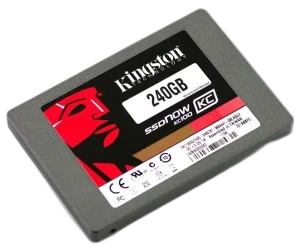
SSDNow KC100
SATA 2.5" · SATA 3 6GBps
Specifications
| Interface | SATA 3 6GBps |
|---|---|
| NAND Type | MLC |
| DRAM Cache | N/A |
| Warranty | 5 years |
| Seq Read | 555 MB/s |
| Seq Write | 510 MB/s |
Overview
Kingston's SSDNow KC100 is a solid state drive built for business computers. It comes equipped with enterprise SMART tools such as reliability tracking, wear leveling and drive life protection. The KC100 is a SATA III 6 GBps SSD capable of reaching maximum sequential read and write speeds of 555 MB/s and 510 MB/s respectively. Users can choose between capacities of 120 GB, 240 GB and 480 GB each with a warranty of five years.
The highest sustained 4k random read and write IOPS is achieved by the 480 GB model at 60,000 and 45,000 respectively. Meanwhile, the highest IOPS numbers for maximum 4k random read and write is achieved by the 120 GB model at 90,000 and 70,000 respectively. Like its cousin Hyper X, the KC100 is powered by SandForce's SF-2281 controller. This allows the SSDNow KC100 to enjoy features such as RAISE and DuraWrite. The Mean Time Between Failure for this drive is 1,000,000 hours.
Specifications:
- Sequential Read: Up to 555 MB/second
- Sequential Write: Up to 510 MB/second
- NAND type: MLC
- Interface: SATA 3 6GBps
- Form Factor: 2.5 inches
- DRAM Cache: None
- TRIM support: Yes
- SMART support: Yes
- MTBF: 1,000,000 hours
- Warranty: 5 years
Part Numbers:
- 120 GB : SKC100S3/120G
- 240 GB : SKC100S3/240G
- 480 GB : SKC100S3/480G
Reviews
-
“With excellent performance and nice bonuses like thermal pads for heat dissipation and additional SMART values that IT departments demand, the KC100 is an excellent choice for client users within the enterprise.”
-
“With fast performance, a five-year warranty, and a generous bundle of accessories, the Kingston SSDNow KC100 Upgrade Bundle Kit makes an excellent choice for first-time buyers who want to upgrade their laptop or desktop to solid-state storage”
CNET