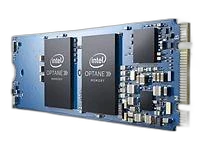
Intel Optane Memory M10 Series
PCIe M.2 · PCIe 3.0 x2, NVMe 1.2 · Intel
Specifications
| Interface | PCIe 3.0 x2, NVMe 1.2 |
|---|---|
| Controller | Intel |
| NAND Type | 128Gb 20nm Intel 3D XPoint |
| DRAM Cache | N/A (3D XPoint) |
| Warranty | 5 years |
| Seq Read | 900 MB/s |
|---|---|
| Seq Write | 145 MB/s |
| Rand Read | 300,000 IOPS |
| Rand Write | 70,000 IOPS |
| Endurance | 183 TBW |
| Seq Read | 1,350 MB/s |
|---|---|
| Seq Write | 290 MB/s |
| Rand Read | 300,000 IOPS |
| Rand Write | 70,000 IOPS |
| Endurance | 183 TBW |
| Seq Read | 1,450 MB/s |
|---|---|
| Seq Write | 640 MB/s |
| Rand Read | 300,000 IOPS |
| Rand Write | 70,000 IOPS |
| Endurance | 365 TBW |
Overview
The Intel Optane Memory M10 series is a low-capacity add-on SSD that is specifically designed to improve the performance of existing storage devices (conventional hard drives) in computers. It uses Intel's Optane or 3D XPoint memory, which offers faster access times compared to traditional NAND-based solid-state drives.
The Intel Optane Memory M10 series is available in capacities of 16GB to 64GB and can be easily installed on compatible motherboards with an M.2 slot. Once installed, it works in conjunction with existing storage devices to accelerate system boot times, application loading, and overall system responsiveness.
Overall, the Intel Optane Memory M10 series is intended as an efficient solution for users looking to boost their computer's performance without having to invest in a full-fledged SSD upgrade. It should offer a noticeable improvement in speed and responsiveness, as compared to just using a mechanical hard drive.
Specifications
Where to Buy
Discontinued
Reviews
-
“Intel's 3D XPoint memory is clearly a far better media for small cache drives than NAND flash, but it is still afflicted by a very high price per GB.”