Intel SSD 660p
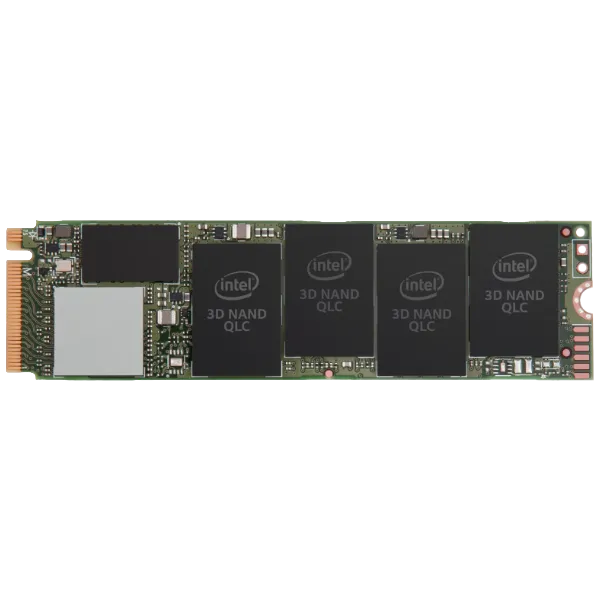
PCIe M.2 · PCIe 3.0 x4, NVMe 1.3 · Silicon Motion SM2263
Specifications
| Interface | PCIe 3.0 x4, NVMe 1.3 |
|---|---|
| Controller | Silicon Motion SM2263 |
| NAND Type | Intel 64-layer 3D QLC |
| DRAM Cache | N/A (HMB) |
| Warranty | 5 years |
| Seq Read | 1,500 MB/s |
|---|---|
| Seq Write | 1,000 MB/s |
| Endurance | 100 TBW |
| Part Number | SSDPEKNW512G8 |
| Seq Read | 1,800 MB/s |
|---|---|
| Seq Write | 1,800 MB/s |
| Endurance | 200 TBW |
| Part Number | SSDPEKNW010T8 |
| Seq Read | 1,800 MB/s |
|---|---|
| Seq Write | 1,800 MB/s |
| Endurance | 400 TBW |
| Part Number | SSDPEKNW020T8 |
Overview
Intel released the SSD 660p in 2018 and it was one of the first widely available consumer NVMe drives using QLC (quad-level cell, 4-bit-per-cell) NAND. QLC reduces cost per gigabyte but offers lower write endurance and lower sustained write performance compared to TLC. The 660p uses Intel's own 64-layer 3D QLC flash with a Silicon Motion SM2263 controller in a DRAM-less configuration using Host Memory Buffer (HMB).
Its sequential speeds clock in at 1,800 MB/s read and write (at 1TB). Once the dynamic SLC write cache is exhausted, however, write throughput drops substantially, as is the case with all QLC drives. Another aspect it shares with other QLC-based models is a very low 200 TBW endurance rating for the 1TB model, The 512GB model is similarly limited to 100 TBW.
Intel subsequently released the 665p (2020, 96-layer QLC) and 670p (2021) as incremental updates with improved NAND density and controller revisions.
Reviews
-
“Even when it's not on sale, the Intel SSD 660p 2TB capacity is a decent bargain, but when it drops down significantly below $200, as we've seen it do several times in the past year, it becomes an absolute steal. If you have an NVMe-capable M.2 slot in your PC and you need good performance at a low price, the 660p is a tough drive drive to beat, even after well more than a year on the market.”
-
“Power users may not be satisfied with the limitations of the Intel SSD 660p, but for more typical users it offers a nice step up from the performance of SATA SSDs with a minimal price premium, making it an easy recommendation.”